This is not another technology cycle.
It is a shift in how value is created and how quickly old sources of advantage decay.
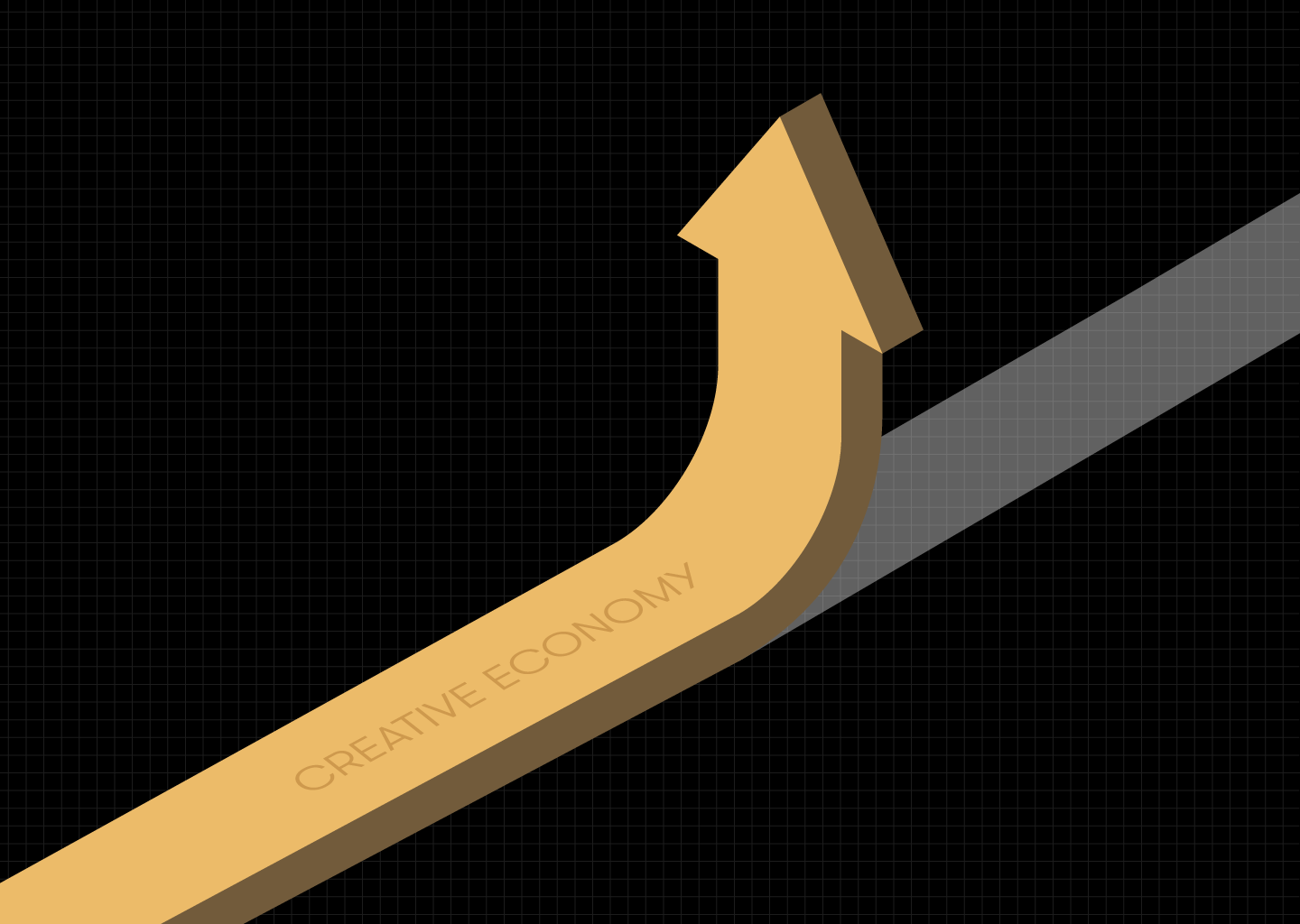
This is not another technology cycle.
It is a shift in how value is created and how quickly old sources of advantage decay.
AI is collapsing the cost of intelligence and execution.
When intelligence becomes cheap, the economics of work change.
When execution becomes abundant, differentiation moves elsewhere.
That change is no longer theoretical.
It is already shaping which work compounds value and which quietly stops mattering.
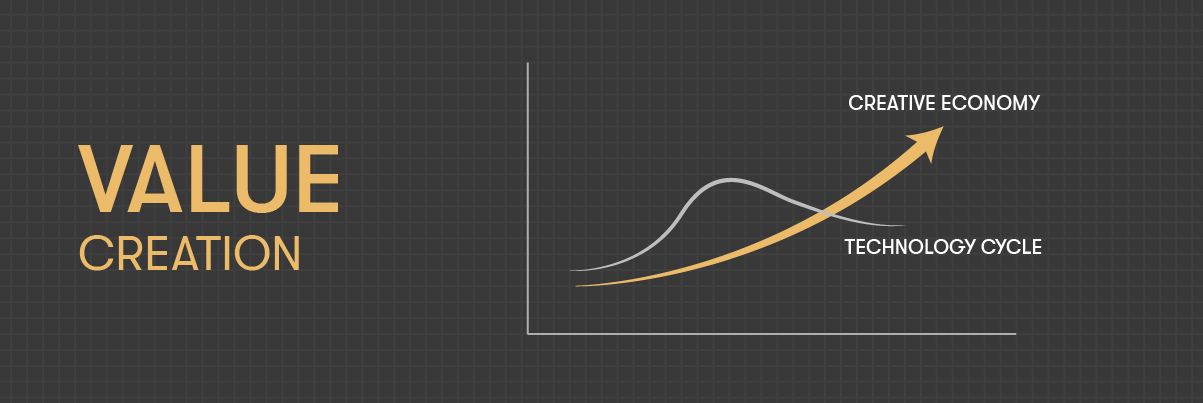
Value has always moved. The pattern is familiar.
Agrarian economies rewarded land and labor.
Industrial economies rewarded machines and scale.
Service economies rewarded expertise and cognitive effort.
Information economies rewarded data, platforms, and distribution.
Each transition disrupted work.
Each created fear.
None eliminated human value.
What changed was where human value sat in the system.
The Creative Economy is not about art. It is about where differentiation sits when intelligence is abundant. It is an economy where advantage comes from framing problems, interpreting signals, and allocating energy faster than competitors not from producing more output.
The Creative Economy rewards something different.
Human differentiation.
Creativity.
Judgment.
Interpretation.
Context.
Meaning.
What feels unprecedented is not the shift itself.
It is the speed at which the underlying capability is advancing and how little time organizations have to adjust before value relocates again.
AI collapses the marginal cost of intelligence.
Work that once required years of training, coordination, and elapsed time can now be generated instantly. Analysis, synthesis, generation, and optimization are no longer scarce capabilities. They are infrastructure.
This does not remove humans from the system.
It redraws the boundary of where humans matter.
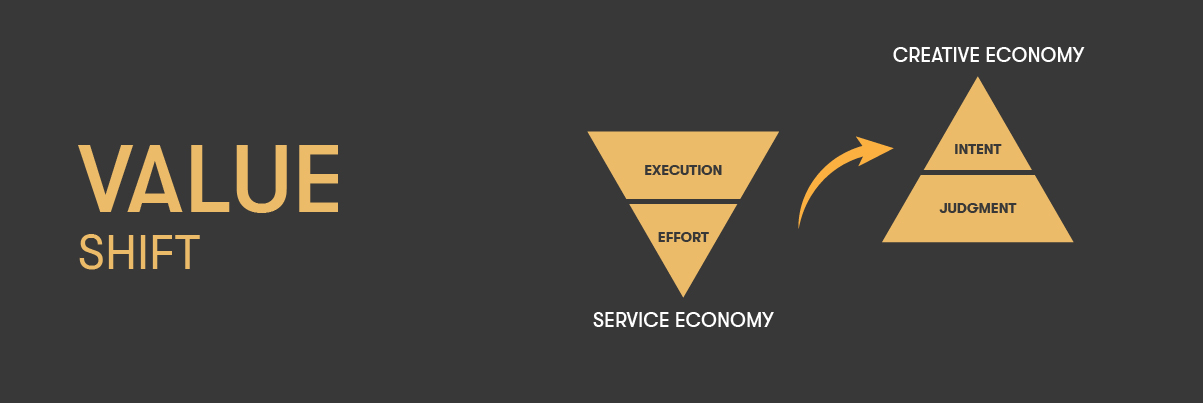
When execution becomes cheap, value moves upstream.
Away from effort.
Away from volume.
Toward intent, framing, and decision quality.
In large enterprises today, teams can explore dozens of strategic options in weeks through prompt-to-prototype work that once took quarters of analysis, alignment, and political sequencing before a single decision was even testable.
The constraint is no longer capacity.
It is judgment.
Most AI conversations fixate on tools. That focus misses the shift entirely.
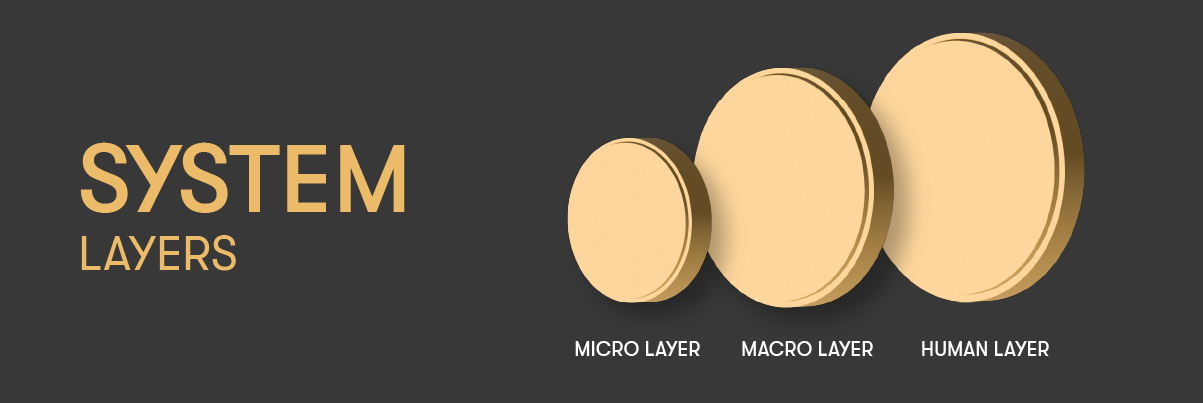
This transition is systemic. It operates across three interacting layers.
Macro
Global competition, demographics, geopolitics, and institutional inertia define the outer limits of change.
Micro
AI, automation, robotics, and agent ecosystems radically alter how tasks are executed.
Human
Identity, emotion, creativity, judgment, and tolerance for uncertainty determine what actually sticks.
The human layer is not a footnote.
It is the governor.
This is why the Creative Economy emerges unevenly, even as the technology advances uniformly.
There is a persistent myth that once technology can do something, organizations must immediately adopt it.
Real systems do not behave that way.
As AI accelerates capability, feedback loops slow adoption.
Markets push back when value erodes faster than trust can form.
Institutions introduce friction through policy, regulation, and norms.
Cultures absorb disruption unevenly.
People resist when meaning, identity, and legitimacy feel threatened.
This is not dysfunction.
It is how systems preserve coherence under stress.
The Creative Economy does not arrive in a single wave.
It arrives through constraint, negotiation, and selective adaptation.
Speed without legitimacy does not create advantage.
It creates backlash.
AI does not replace people.
It replaces layers of work.
• Pattern recognition
• Predictable decisions
• Repeatable workflows
• Standardized outputs
As these layers commoditize, value moves upward.
An analyst stops producing analysis and starts shaping implications.
A designer stops pushing pixels and starts creating meaning.
An engineer stops writing code and starts designing systems, behavior, and constraints.
Titles remain familiar.
The work beneath them changes completely.
Human value is not disappearing.
It is being repriced.
And not all roles, teams, or business models will experience that shift in the same way.
One of the least discussed consequences of the Creative Economy is what it does to scale.
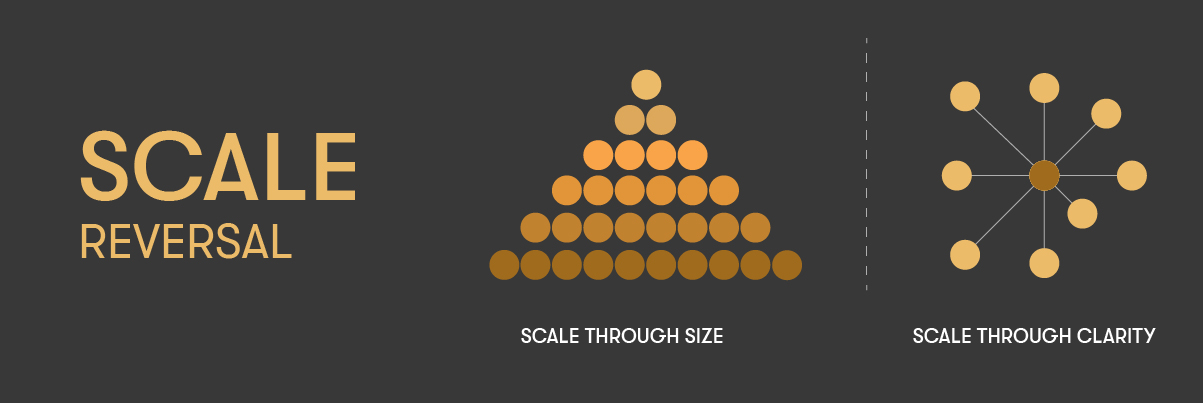
When intelligence was expensive, scale favored size.
When intelligence becomes cheap, scale favors clarity.
Small, focused teams can now operate with capabilities that once required entire departments. Research, synthesis, modeling, and iteration collapse into hours rather than weeks. What differentiates outcomes is no longer capacity, but judgment.
A solo domain expert with AI can perform work that previously demanded a small team. The advantage does not come from speed alone, but from knowing which questions matter, which signals to trust, and which outputs to ignore.
This allows lean teams to:
• Reach global markets without heavy infrastructure
• Compete on originality, not headcount
A two-person studio can design, launch, and iterate globally.
A niche expert can build a durable business without becoming an institution.
This is not nostalgia for artisanal work.
It is leverage at micro scale.
And it quietly destabilizes pyramids built on leverage through labor accumulation rather than differentiated judgment.
Large organizations are not made obsolete by the Creative Economy.
They are forced to change how value is created inside them.
The old model treated the enterprise as a machine.
Predictable. Optimized. Centrally controlled.
That model fails when uncertainty is constant.
The emerging model looks less mechanical and more biological.
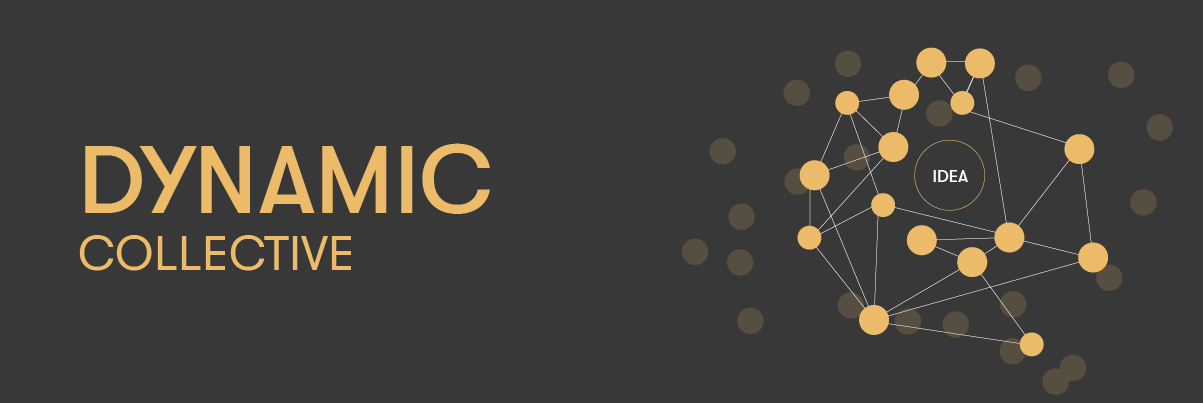
Large organizations begin to behave as dynamic collectives.
• Small, outcome-owned units form, dissolve, and recombine
• Exploration happens locally, close to real signals
• Learning outpaces centralized planning
In these systems, strong ideas survive.
Not because leaders declare them winners, but because they earn energy.
• Attention
• Talent
• Capital
• Trust
Weak ideas are not killed.
They simply stop attracting resources.
This is selection, not consensus.
The enterprise still matters deeply.
• Capital allocation
• Shared data and platforms
• Brand and distribution
• Governance and risk management
Creativity decentralizes.
Standards, trust, and accountability remain centralized.
A dynamic collective is not an org chart.
It is a living system.
Most organizations are still operating with Service Economy playbooks.
Linear plans.
Upfront certainty.
Strategy handed down.
Feedback arriving too late to matter.
That logic breaks in a biological system.
This is where Vibe enters, not as a tool, but as a response to a changed economic reality. Vibe treats strategy as something you create through interaction, not something you predict and document in advance. Humans and AI work together. Direction emerges through making, testing, and learning, not by pretending the answer is already known.
In a Creative Economy, work shifts.
• From planning to exploration
• From certainty to sense-making
• From execution-first to intent-first
• From fixed roles to continuously evolving ones
Vibe is not about speed.
It is about adaptation without chaos.
Every economic shift has a moment when its logic becomes obvious.
After that moment, maintaining the old model becomes harder than adapting to the new one.
An idea, once recognized, cannot be unseen.
Not because it demands action, but because it changes how stability is perceived.
What once felt durable begins to feel brittle.
What once felt sufficient begins to feel incomplete.
The Creative Economy does not arrive by mandate.
It arrives by recognition, followed by reorganization.
This is not a future concept.
It is already forming.
The real question is whether organizations and individuals will recognize where value is moving and adjust how they work, lead, and organize before friction hardens into failure.
If this is not another tech cycle, then many of our assumptions about careers, companies, leadership, and scale no longer hold.
That tension is not a threat.
It is a signal.
And it is worth paying attention to.
If intelligence is no longer scarce, then the rules of value creation change.
In this series, we will explore three shifts:
Why traditional planning feels unstable and what replaces prediction when uncertainty increases.
How organizations move from forecasting to structured creation.
What human + AI co-creation actually looks like in practice.
And how governance survives speed.
How roles evolve when tasks automate.
What this means for Gen Z entering work mid-transition.
And why leadership becomes about trajectory, not static jobs.
This is not a technology series.
It is an economic one.
The next post begins with a harder question:
If intelligence is abundant, why does strategy feel more fragile than ever?
The views and opinions expressed in this blog are those of the author and do not necessarily reflect the official position or perspective of Photon.

John Negrau is part of Photon’s Executive Leadership Team, leading the Client Strategy & Innovation group across industries and global markets. He integrates digital transformation, AI strategy, technology, data, and operating models to help enterprise clients accelerate growth, modernize customer experiences, and build enduring competitive advantage.

Jonathan Zwang (jz) is a digital and AI strategy consultant with deep expertise in emerging technologies, enterprise transformation, and future‑forward thinking. He helps organizations navigate complexity, spot inflection points early, and create leverage through intelligent systems.